

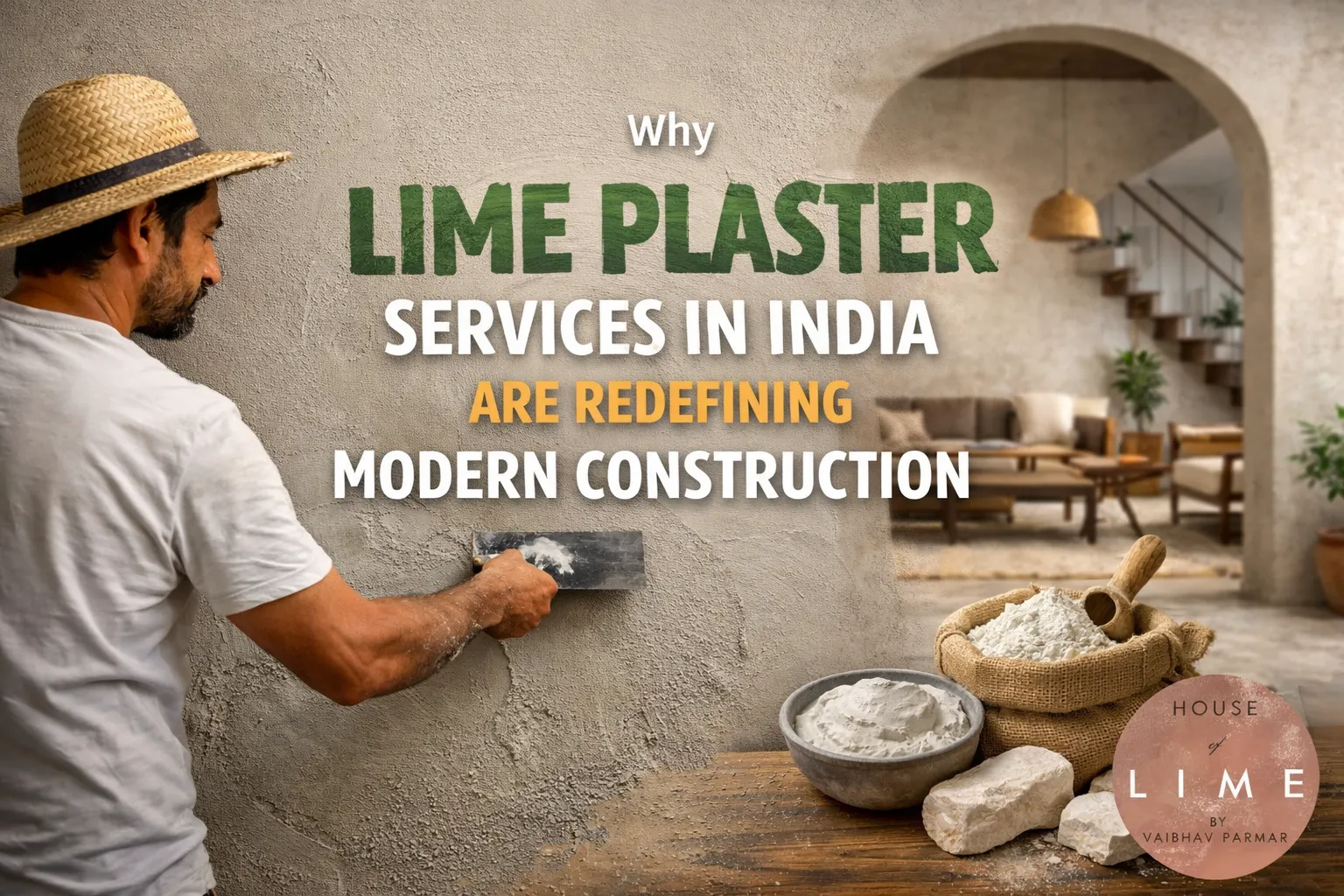
Modern construction in India has been stuck in a loop for years. Cement everywhere. Fast execution. Standard finishes. And then, a few years later, the same problems start showing up—cracks, damp walls, peeling paint, and rising maintenance costs.
So the real question is: if this system was actually working, why are these issues so common?
That’s exactly why lime plaster is making a comeback. Not because it’s trendy, but because it fixes problems that cement never solved. And with the rise of professional Lime Plaster Services India, homeowners and architects are starting to rethink what “modern construction” should actually mean.
Let’s get into what’s really changing.
Most construction today is built around speed and cost, not performance.
Cement plaster is quick to apply, easy to source, and familiar to every contractor. But it comes with trade-offs that people usually ignore during construction:
These aren’t rare issues. They’re standard outcomes.
So when people start looking for alternatives, lime plaster naturally comes into the conversation.
Before cement took over, lime plaster was widely used across India. And here’s the part people forget: many of those buildings are still standing strong today.
That’s not coincidence.
Lime plaster works because it adapts to environmental conditions instead of resisting them. It handles moisture, temperature changes, and structural movement far better than rigid materials.
Modern construction is now rediscovering this, not out of nostalgia, but necessity.
This is the biggest advantage, and most people underestimate it.
Cement creates sealed walls. Moisture gets trapped inside. Over time, this leads to dampness, mold, and structural damage.
Lime plaster allows walls to breathe. Moisture passes through and evaporates naturally.
That single feature solves multiple problems at once:
If you’ve ever dealt with damp walls, you know how important this is.
Buildings are not static. They expand and contract with temperature changes.
Cement is rigid. It cracks under stress.
Lime plaster is flexible. It adjusts with the structure instead of resisting it.
That’s why lime-based walls tend to have fewer cracks over time. And fewer cracks mean fewer repairs.
It’s a simple advantage, but it makes a big difference in long-term performance.
Modern homes often rely on paints, textures, and finishes to make walls look appealing.
Lime plaster doesn’t need that.
It naturally creates:
It doesn’t look flat or artificial. It looks real.
That’s why it’s being used in:
It fits modern design without trying too hard.
Let’s not ignore this.
Cement production is a major contributor to carbon emissions. As awareness grows, more people are looking for alternatives that reduce environmental impact.
Lime plaster has a lower carbon footprint and even absorbs carbon dioxide as it cures.
So if sustainability matters even slightly to you, this isn’t a minor benefit. It’s a strong reason to consider switching.
Here’s where most people get it wrong.
They focus only on initial cost.
Yes, lime plaster can be more expensive upfront. But cement comes with ongoing costs:
Lime reduces these recurring expenses.
So instead of asking, “What’s cheaper today?” ask, “What costs less over 10–15 years?”
That’s the smarter comparison.
Here’s something you need to understand clearly.
Lime plaster is not a shortcut solution.
You can’t apply it like cement and expect good results. It requires proper technique, layering, and curing time.
This is why working with experts offering Construction, Masonry, Flooring & Architectural Services in India is critical.
If the application is wrong, the material won’t perform the way it should.
Execution matters more than material.
This isn’t just a homeowner trend. Architects are also moving toward lime plaster for practical reasons.
It allows them to:
It’s not about going traditional. It’s about building smarter.
Let’s keep this realistic.
Lime plaster is a good choice if:
It’s not the best choice if:
Be honest about what you want before deciding.
Lime plaster isn’t redefining modern construction because it’s new. It’s redefining it because it works better.
It solves real problems—moisture, cracks, maintenance, and indoor comfort—without relying on temporary fixes.
But it’s not a plug-and-play solution. It requires the right mindset, proper execution, and skilled professionals.
If you’re willing to approach construction with a long-term perspective, lime plaster is one of the smartest choices you can make.
If not, cement will still do the job. Just don’t expect it to perform differently than it always has.
Because in the end, modern construction isn’t about what’s common. It’s about what actually works.
House of Lime is a sustainable construction studio specializing in vernacular design, lime plaster finishes, and eco-friendly building techniques to create timeless, climate-responsive spaces.
Copyright © 2025 House of Lime. All rights reserved.
Developed by Alpha Creative Studio