
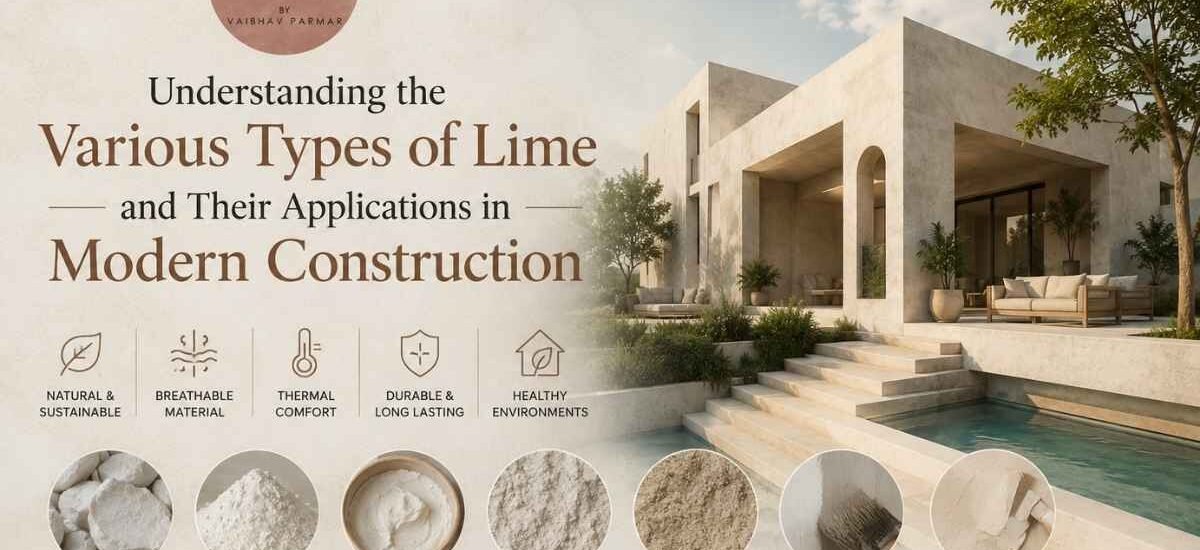
Lime has been one of the most important building materials used by humans for thousands of years. From ancient monuments and heritage structures to modern residential and commercial projects, lime continues to play a significant role in construction. Today, architects, builders, and designers are increasingly turning to lime-based materials because of their durability, sustainability, breathability, and aesthetic appeal.
As modern construction focuses more on eco-friendly building practices and long-lasting structures, understanding the different types of lime and their applications has become more important than ever. Each type of lime offers unique properties that make it suitable for specific construction needs.
In this guide, we will explore the various types of lime used in modern construction and understand how they contribute to creating stronger, healthier, and more sustainable buildings.
What is Lime in Construction?
Lime is a natural material primarily derived from limestone. Through a heating process known as calcination, limestone is transformed into different forms of lime that can be used in construction.
Lime has been widely used for:
- Plastering
- Masonry work
- Mortar preparation
- Decorative finishes
- Heritage restoration
- Sustainable construction
Unlike many modern synthetic materials, lime allows buildings to breathe naturally while maintaining structural strength and durability.
Why Lime is Important in Modern Construction
The construction industry is increasingly looking for materials that support sustainability without compromising performance. Lime offers several benefits that make it suitable for contemporary projects:
- Excellent breathability
- Moisture regulation
- Crack resistance
- Enhanced indoor comfort
- Environmentally friendly properties
- Long service life
- Natural appearance
These advantages have helped lime regain popularity among architects and builders worldwide.
Quick Lime (Calcium Oxide)
Quick lime is one of the primary forms of lime produced by heating limestone at very high temperatures.
This process removes carbon dioxide from the limestone and creates calcium oxide, commonly known as quick lime.
Applications of Quick Lime
Quick lime is generally not used directly as a finishing material. Instead, it serves as a raw material for producing other forms of lime such as:
- Hydrated lime
- Lime putty
- Construction mortars
- Soil stabilization products
In large-scale infrastructure and construction projects, quick lime is often used for ground improvement and soil treatment.
Hydrated Lime (Calcium Hydroxide)
Hydrated lime is produced by adding water to quick lime. The result is a fine white powder that is easy to handle and widely used across the construction industry.
Applications of Hydrated Lime
Hydrated lime is commonly used in:
- Cement mixtures
- Mortars
- Wall plasters
- Masonry construction
- Surface coatings
Hydrated lime improves workability and enhances the bonding strength of construction materials. It also contributes to better durability and crack resistance in walls and masonry structures.
Many modern projects use hydrated lime as a key ingredient in high-quality plastering systems.
Lime Putty
Lime putty is created by mixing quick lime with excess water and allowing it to mature over time.
The aging process improves its consistency, workability, and overall performance.
Applications of Lime Putty
Lime putty is often used for:
- Decorative wall finishes
- Premium interior plasters
- Heritage restoration
- Architectural detailing
Its smooth texture makes it highly desirable for luxury residential and commercial spaces.
Many builders and designers choose <a href=”https://houseoflime.in/premium-quality-lime-plaster/”>lime plaster solutions</a> developed from mature lime putty because they provide elegant finishes while maintaining breathability and durability.
Non-Hydraulic Lime
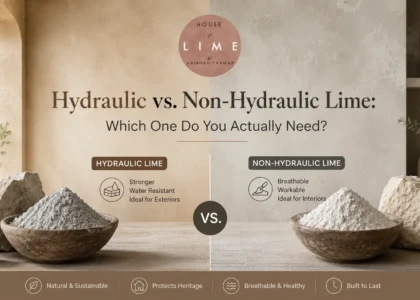
Non-hydraulic lime hardens through a process known as carbonation. It absorbs carbon dioxide from the air and gradually becomes stronger over time.
Applications of Non-Hydraulic Lime
This type of lime is frequently used in:
- Heritage buildings
- Historical monuments
- Traditional homes
- Decorative plasterwork
One of its key advantages is flexibility. It allows buildings to move naturally without developing significant cracks.
Architects often prefer non-hydraulic lime when preserving the original character of traditional structures.
Hydraulic Lime
Hydraulic lime contains natural clay and mineral impurities that enable it to set in the presence of water.
Unlike non-hydraulic lime, it can harden even in damp conditions.
Applications of Hydraulic Lime
Hydraulic lime is suitable for:
- Exterior walls
- Foundations
- Basements
- Retaining walls
- Coastal structures
Its higher strength and moisture resistance make it an excellent choice for modern construction projects exposed to varying weather conditions.
Hydraulic lime provides an effective balance between durability and breathability, making it increasingly popular among sustainable building professionals.
Lime Wash
Lime wash is one of the oldest decorative finishes still used today.
It is made by diluting lime with water and often adding natural pigments to create attractive color variations.
Applications of Lime Wash
Lime wash is widely used for:
- Interior walls
- Exterior facades
- Heritage restoration
- Hospitality projects
- Residential architecture
Its soft texture and natural appearance create visually appealing spaces while maintaining healthy indoor environments.
Many architects and property owners now choose specialized <a href=”https://houseoflime.in/lime-wash-service-for-hotels-and-resorts/”>lime wash finishes</a> to achieve elegant and environmentally friendly wall treatments.
Lime Mortar
Lime mortar has been used in construction for centuries and remains a preferred choice for many restoration and eco-friendly projects.
Unlike cement mortar, lime mortar remains flexible and breathable.
Applications of Lime Mortar
Lime mortar is commonly used for:
- Brick masonry
- Stone masonry
- Heritage restoration
- Sustainable construction projects
Its ability to accommodate natural movement helps reduce cracking and extends the lifespan of structures.
Lime Plaster in Modern Construction
One of the fastest-growing applications of lime is in plastering systems.
Modern builders increasingly recognize the benefits of lime plaster compared to conventional alternatives.
Benefits of Lime Plaster
- Breathable walls
- Better moisture management
- Reduced mold growth
- Improved indoor air quality
- Enhanced aesthetics
- Long-term durability
Lime plaster creates comfortable indoor environments by allowing moisture to move naturally through walls.
It also contributes to energy-efficient buildings. Research has shown how <a href=”https://houseoflime.in/how-lime-plaster-improves-thermal-insulation-india/”>thermal insulation benefits of lime plaster</a> help maintain indoor temperatures and improve overall comfort.
Role of Lime in Sustainable Construction
Sustainability is becoming a major priority in modern architecture.
Builders are increasingly selecting materials that reduce environmental impact while delivering long-term performance.
Lime supports sustainable construction because it:
- Uses natural raw materials
- Reduces waste generation
- Has a long service life
- Can be recycled
- Supports healthier indoor environments
Additionally, lime-based materials absorb carbon dioxide during the carbonation process, helping reduce their environmental footprint over time.
Lime in Luxury and Hospitality Construction
Luxury hotels, resorts, and premium residential developments are increasingly embracing lime-based finishes.
The combination of natural beauty, durability, and sustainability makes lime a preferred choice for high-end projects.
Designers often use lime plaster, lime wash, and decorative lime finishes to create sophisticated interiors and timeless architectural features.
For a deeper understanding of how lime is used in premium hospitality spaces, explore this guide on <a href=”https://houseoflime.in/types-of-lime-used-in-luxury-hotels-and-resorts-choosing-the-right-finish-for-timeless-elegance/”>lime applications in luxury hotels and resorts</a>.
Choosing the Right Type of Lime
Selecting the appropriate type of lime depends on several factors:
Project Type
Residential, commercial, heritage, and hospitality projects may require different lime products.
Climate Conditions
Weather and moisture exposure influence the choice between hydraulic and non-hydraulic lime.
Structural Requirements
Some projects require higher strength, while others prioritize flexibility and breathability.
Desired Finish
Decorative finishes may benefit from lime putty or lime wash, while structural applications may require hydraulic lime.
Conclusion
Lime remains one of the most versatile and valuable materials in modern construction. From quick lime and hydrated lime to hydraulic lime, non-hydraulic lime, lime putty, and lime wash, each type offers unique characteristics that serve different construction needs.
As the industry moves toward sustainable and healthier building practices, lime-based materials continue to gain popularity among architects, builders, and property owners. Their ability to provide durability, breathability, aesthetic appeal, and environmental benefits makes them an excellent choice for both traditional and contemporary construction projects.
By understanding the various types of lime and their applications, construction professionals can make informed decisions that result in stronger, more beautiful, and longer-lasting buildings.