
For centuries, Indian architecture has carried a distinct identity built on natural materials, time-tested methods, and a deep respect for the environment around us. When we picture old havelis in Rajasthan, Mughal-era monuments, or traditional South Indian homes, the soft glow of lime-plastered walls is one of the first details that stands out. For a long time, this ancient craft was pushed aside by modern construction trends that favored speed over sustainability. But today, as India shifts toward healthier, eco-conscious building practices, lime plaster is emerging again as a smart, future-ready choice.
The revival isn’t just a trend. It’s a practical movement shaped by architects, conservationists, homeowners, and professionals who want long-lasting, breathable, toxin-free finishes that look refined without harming the environment. Lime plaster is at the center of this shift, proving that the oldest material in India is surprisingly aligned with modern expectations.
This article takes you through the science, history, benefits, and future potential of lime plaster, and why its comeback is shaping a more sustainable path for Indian architecture.
A Legacy Rooted in India’s Past
Lime has always been a part of India’s building culture. From Ajanta caves to Red Fort and old Rajasthani havelis, lime-based materials were used not only for finishing walls but also for cooling interiors, protecting surfaces, and reinforcing structures. It wasn’t chosen by accident. Ancient craftsmen understood how lime breathes, how it strengthens over time, and how its natural antibacterial properties keep homes healthy.
This wasn’t just technique—it was wisdom. Lime plaster created interiors that were comfortable, visually rich, and extremely durable. Many of these historic buildings still stand strong centuries later, proving that traditional science is sometimes more advanced than modern shortcuts.
The Decline: Convenience Over Craft
In the late 20th century, cement-based materials became the default choice because they seemed faster, easier, and standardized. Skilled artisans who specialized in lime work became fewer. Homeowners leaned toward cheaper, quicker solutions without realizing the long-term trade-offs: trapped moisture, wall cracks, dull finishes, and poor indoor air quality.
What seemed like progress ended up creating a gap between what buildings needed and what they received.
Why Lime Plaster Is Making a Strong Return
Today, the conversation has changed. Indian homeowners are more aware of the chemicals in their building materials. Architects are rethinking how buildings respond to heat and humidity. Conservationists are restoring old structures using their original materials. Sustainability is not a buzzword anymore; it’s a practical need.
Here’s why lime plaster fits perfectly into this new landscape.
1. Better Indoor Air Quality
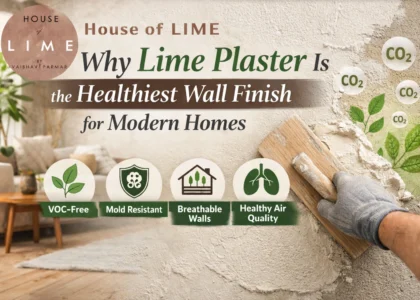
Lime naturally absorbs carbon dioxide during curing, which reduces indoor pollutants. It also has antibacterial and antifungal properties that keep walls free from mold and dampness. This makes it a healthier alternative, especially for Indian climates where humidity and dust are constant challenges.
2. Thermal Comfort Without Machines
Lime plaster regulates temperature by allowing walls to breathe. It keeps interiors cool in summer and warm in winter, reducing dependency on air conditioning. In a country where energy costs are rising, this advantage is impossible to ignore.
3. Durability That Improves With Time
Cement becomes brittle. Lime becomes stronger as it ages. That is why centuries-old forts and palaces still retain their lime finishes. When applied correctly, lime plaster can outperform most modern materials in lifespan and appearance.
4. Sustainable and Low-Carbon
Lime releases significantly less carbon during production compared to cement. It also reabsorbs carbon dioxide from the atmosphere, making it a truly eco-friendly option.
5. Aesthetic Versatility
Modern lime finishes are far from dull. From matte and smooth to textured and polished, lime plaster adapts beautifully to contemporary interiors. Whether a homeowner wants a soft earthy look or a refined luxurious sheen, lime offers a finish that feels natural and handcrafted.
The Return of Skilled Lime Craftsmanship
With demand rising, trained artisans and specialized lime-based brands have emerged to revive this traditional craft. Modern application techniques maintain old artistry while improving efficiency, consistency, and longevity. This has made lime plaster more accessible and reliable for new construction and renovation projects.
For those seeking professional execution, the Lime Plaster Service in India offered by organizations like House of Lime ensures proper materials, expert application, and a finish that lasts decades.
Exploring Araish: India’s Most Elegant Plaster Tradition
No discussion on lime can be complete without mentioning Araish. Originating from Rajasthan, Araish plaster is known for its glossy, marble-like sheen that looks luxurious without using synthetic paints or chemicals. This finish has regained popularity among designers who want an opulent yet eco-friendly wall surface.
If you are looking into specialized finishes, Araish Plaster India offers authentic techniques and materials that bring back the charm of heritage craftsmanship.
Lime Plaster and Sustainable Architecture
India’s architectural community is embracing natural materials again, combining heritage knowledge with modern design goals. Lime plaster fits perfectly into this shift toward sustainable construction.
Architects are using lime not only for its environmental benefits but also for its ability to complement modern aesthetics. As more buildings integrate traditional techniques with contemporary design, lime plaster is becoming an important part of sustainable architecture.
To create thoughtful, eco-balanced spaces, many professionals prefer working with experienced consultants. For design guidance rooted in sustainability and tradition, Architectural Design Consultant India services can help shape projects that fully utilize the strengths of lime-based materials.
How Lime Plaster Performs Across India’s Climates
India’s diverse climate zones put building materials to the test. Lime plaster adapts effectively across all conditions.
Hot and Dry Regions (Rajasthan, Gujarat):
Lime naturally cools interiors and reduces heat transfer.
Humid Regions (Kerala, Coastal areas):
Its breathability prevents moisture accumulation and fungal growth.
Cold Zones (Himachal, Uttarakhand):
Lime retains warmth better than cement due to its porous structure.
Urban Environments (Delhi, Mumbai, Bengaluru):
Its ability to balance humidity helps maintain stable indoor comfort in polluted and dense urban areas.
Why Modern Homeowners Are Choosing Lime Again
The new generation of homeowners doesn’t just want good-looking homes—they want safer, long-lasting ones. Lime plaster fits into this mindset:
• Non-toxic
• Breathable
• Less prone to cracking
• Naturally beautiful
• Lower maintenance
• Compatible with heritage restoration and modern minimalism
This combination of health, durability, and timeless aesthetics makes lime an attractive choice for contemporary homes.
A Close Look at the Future: Will Lime Become the Standard Again?
Lime plaster won’t replace modern materials completely, but its demand is rising across premium homes, eco-conscious projects, boutique hotels, heritage renovations, and luxury interiors. The shift is gradual but clear.
Three factors are driving lime plaster’s growing popularity:
1. India’s rising awareness of indoor air quality
People now understand that paint and cement-based materials can trap toxins.
2. Sustainability expectations in architecture
Designers are choosing materials that reduce carbon footprint and improve building health.
3. A desire for timeless, handcrafted aesthetics
Lime delivers a depth and character that factory-made finishes can’t match.
If this momentum continues, lime plaster could soon become the preferred choice for high-value residential and commercial projects.
The Revival Is Not a Trend—It’s a Correction
What we’re seeing today is a return to smarter, more sustainable building practices. Lime plaster was never outdated. It was overlooked. Its comeback is not about nostalgia; it’s about practicality and long-term thinking.
India’s oldest building material is proving that true progress doesn’t always come from new inventions. Sometimes it comes from rediscovering what already worked beautifully.
Final Thoughts
As India grows and redefines its architectural identity, lime plaster stands as a material that connects the past with the future. It checks all the boxes—health, beauty, durability, sustainability—and aligns with what modern Indian homes genuinely need.
If you’re building or renovating, lime plaster isn’t just worth considering. It deserves a serious place in your decision-making.