
Luxury home design is evolving. Today’s homeowners are moving away from glossy paints, artificial textures, and short-lived design trends in favor of materials that are timeless, natural, and crafted with care. One finish that has made a remarkable comeback in premium residential architecture is Araish Lime Plaster.
Rooted in India’s rich architectural heritage, Araish Lime Plaster is no longer reserved for palaces and heritage buildings. It is now one of the most sought-after wall finishes for luxury villas, designer apartments, boutique homes, and contemporary residences. Its handcrafted texture, natural elegance, and ability to enhance indoor comfort make it a preferred choice for architects and interior designers alike.
At House of Lime, we believe luxury should feel authentic. Araish Lime Plaster delivers exactly that by combining centuries-old craftsmanship with modern architectural design.
What Is Araish Lime Plaster?
Araish Lime Plaster is a traditional decorative plaster made using natural lime and carefully selected mineral materials. It is applied by skilled artisans in multiple layers to create a smooth, seamless, and luxurious finish.
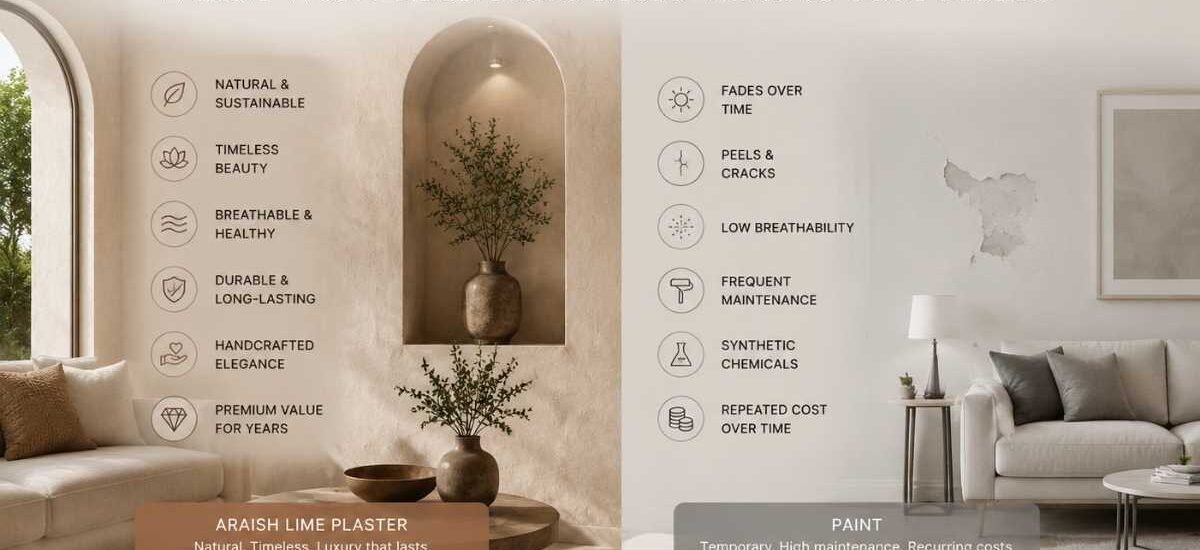
Unlike conventional paint, Araish becomes part of the wall rather than simply coating its surface. The result is a finish with remarkable depth, subtle movement, and a soft natural sheen that changes beautifully as light moves through the room.
Its handcrafted appearance ensures that every wall is unique, giving homeowners an interior that cannot be replicated with factory-made finishes.
Why Luxury Homeowners Prefer Araish Lime Plaster
Luxury today is defined by quality, craftsmanship, and timeless design rather than excessive decoration.
Araish Lime Plaster perfectly reflects these values.
Timeless Beauty
Unlike decorative paints that quickly follow changing trends, Araish Lime Plaster offers an elegant appearance that remains relevant for decades.
Its soft textures and earthy character complement both traditional Indian architecture and modern minimalist homes.
Handcrafted Exclusivity
Every Araish wall is finished by hand.
This means no two walls are identical. The subtle variations created during application give each space a bespoke appearance that reflects true luxury.
For homeowners investing in premium interiors, this uniqueness becomes one of the biggest advantages.
Perfect for Modern Indian Homes
Modern Indian homes face unique climatic challenges, including intense summers, humidity, and seasonal weather changes.
Natural materials are increasingly being chosen because they perform better under these conditions while creating healthier indoor spaces.
Traditional building materials such as lime are also making a strong comeback in contemporary architecture as homeowners rediscover climate-responsive construction methods.
Araish Lime Plaster blends beautifully into this movement by offering both performance and aesthetics.
Whether applied in living rooms, bedrooms, entrance foyers, staircases, or double-height spaces, it creates interiors that feel sophisticated and welcoming.
A Finish That Works with Every Luxury Design Style
One of the greatest strengths of Araish Lime Plaster is its versatility.
It pairs effortlessly with:
- Contemporary architecture
- Mediterranean-inspired homes
- Modern organic interiors
- Japandi design
- Minimalist luxury
- Heritage restoration projects
- Boutique villas
- Luxury penthouses
Its neutral tones and natural texture work beautifully alongside wood, stone, brass, marble, linen, and handcrafted furniture.
This flexibility allows designers to create spaces that feel warm, elegant, and timeless.
Texture Is Becoming the New Luxury
Interior design is moving beyond flat painted walls. Designers now use texture to create depth, warmth, and visual interest, making walls an integral part of the overall design language rather than just a background surface.
Araish Lime Plaster delivers exactly this effect.
As natural light changes throughout the day, its surface subtly reflects light and shadow, adding movement and richness that conventional paints simply cannot achieve.
Instead of appearing flat, walls become architectural features that enhance the entire home.
Sustainable Luxury for Modern Living
Today’s luxury homeowners are making environmentally responsible choices without compromising on aesthetics.
Araish Lime Plaster is made using natural materials and traditional craftsmanship, making it a sustainable alternative to many synthetic wall coatings.
Some of its environmental advantages include:
- Natural mineral composition
- Long-lasting durability
- Reduced maintenance
- Breathable wall system
- Timeless finish that avoids frequent renovations
These qualities make Araish an excellent choice for homeowners who value both luxury and sustainability.
Comfort Beyond Appearance
A beautiful wall finish should also improve the way a home feels.
Lime-based finishes are naturally breathable, helping walls regulate moisture more effectively than many conventional coatings. This contributes to healthier interiors and improved comfort, especially in Indian climatic conditions.
If you would like to understand this benefit in greater detail, read How Lime Plaster Can Keep your home cool and discover why traditional lime continues to be one of the smartest choices for Indian homes.
Why Architects Recommend Araish Lime Plaster
Architects appreciate materials that combine beauty with long-term performance.
Araish Lime Plaster offers:
- Elegant handcrafted finishes
- Timeless appeal
- Natural textures
- Premium visual depth
- Design flexibility
- Sustainable construction
Many luxury residential projects now incorporate Araish as a feature wall, staircase finish, entrance statement, or complete interior wall treatment.
Working with an experienced Architectural Design Consultant also helps homeowners choose finishes that complement the architecture, lighting, furniture, and lifestyle of the space.
The House of Lime Difference
Creating a flawless Araish finish requires expertise, precision, and craftsmanship.
At House of Lime, our artisans combine traditional application techniques with modern design sensibilities to produce premium lime plaster finishes that elevate every project.
Whether you are building a luxury villa, renovating a premium apartment, or designing a boutique hospitality space, our professional Lime Plaster Service ensures exceptional quality from consultation to final application.
Homeowners seeking authentic traditional finishes can also explore our premium Araish Plaster in India solutions, carefully crafted to bring timeless elegance into contemporary homes.
Conclusion
Luxury is no longer measured by expensive materials alone. It is defined by authenticity, craftsmanship, and thoughtful design.
Araish Lime Plaster embodies all these qualities. Its handcrafted beauty, breathable composition, sustainable nature, and timeless elegance make it one of the finest wall finishes available for modern Indian homes.
As architects and homeowners continue embracing natural materials and textured interiors, Araish Lime Plaster is proving that true luxury is not about following trends. It is about creating spaces that remain beautiful, comfortable, and meaningful for generations.