
When homeowners think about indoor comfort, they often focus on air conditioners, insulation, ventilation systems, or energy-efficient windows. However, one of the most overlooked factors affecting indoor comfort is the material covering the walls themselves. Wall finishes play a significant role in how a home manages heat, moisture, and air quality.
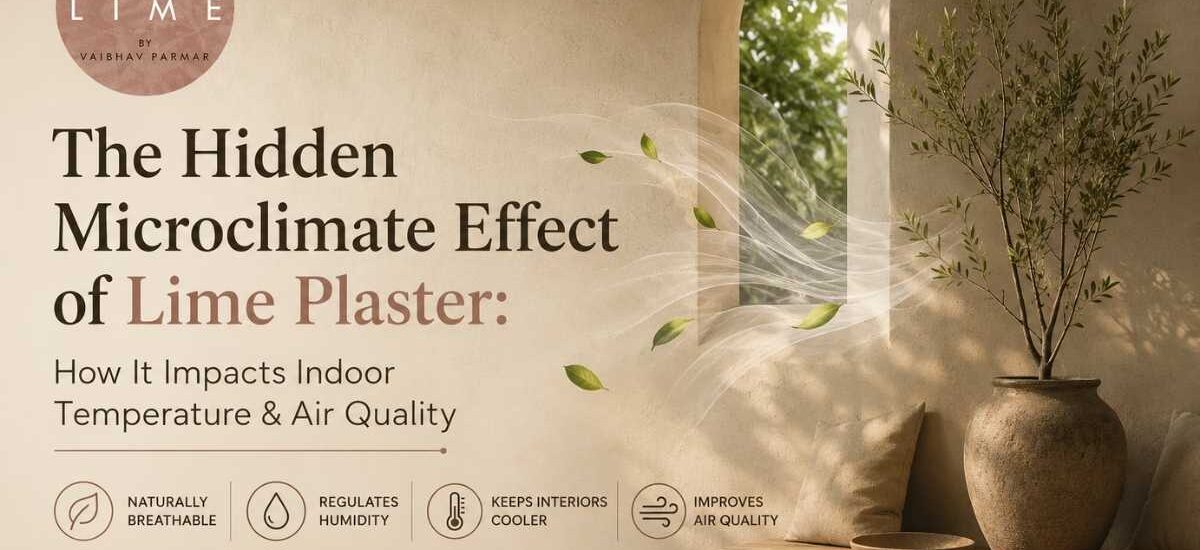
Among traditional building materials, lime plaster stands out for its unique ability to influence the indoor environment. Beyond its visual appeal and durability, lime plaster helps create what experts often describe as a healthy indoor microclimate. By naturally regulating moisture and interacting with temperature changes, lime plaster contributes to a more comfortable living space throughout the year.
This hidden microclimate effect is one of the reasons lime plaster is experiencing a revival in modern sustainable architecture.
What Is an Indoor Microclimate?
A microclimate refers to the environmental conditions within a specific space. Inside a home, it includes factors such as:
- Temperature stability
- Humidity levels
- Air quality
- Moisture balance
- Thermal comfort
- Ventilation effectiveness
Even when two homes are located in the same neighborhood, their indoor microclimates can feel completely different depending on construction materials and wall systems.
Materials that regulate moisture and temperature naturally help create healthier and more comfortable interiors.
Why Wall Finishes Matter More Than You Think
Walls make up a significant portion of a building’s surface area. They constantly interact with the surrounding environment by absorbing, releasing, and transferring heat and moisture.
Modern synthetic finishes often create sealed surfaces that limit this interaction. While this may appear beneficial, it can sometimes trap moisture and reduce the wall’s ability to self-regulate.
Lime plaster works differently.
Its breathable structure allows walls to participate in maintaining indoor balance rather than acting as barriers.
This makes a noticeable difference in homes exposed to humidity fluctuations and temperature changes.
How Lime Plaster Regulates Moisture Naturally
One of lime plaster’s greatest strengths is its breathability.
Unlike dense cement coatings or synthetic wall systems, lime plaster allows water vapor to move through the wall. This means excess moisture can evaporate naturally instead of becoming trapped.
When indoor humidity rises due to:
- Cooking
- Bathing
- Monsoon weather
- Occupancy levels
- Daily activities
lime plaster helps absorb and release moisture gradually.
This process contributes to a more stable indoor environment and reduces the likelihood of excessive dampness.
The Connection Between Humidity and Comfort
Most people associate comfort with temperature alone, but humidity plays an equally important role.
A room with balanced humidity often feels cooler and more comfortable than a room with high moisture levels.
Excess humidity can cause:
- Sticky indoor conditions
- Musty odors
- Condensation on surfaces
- Mold growth
- Reduced air quality
By helping regulate moisture levels, lime plaster supports a more pleasant indoor atmosphere throughout the year.
This natural balancing effect is especially valuable in tropical and humid climates.
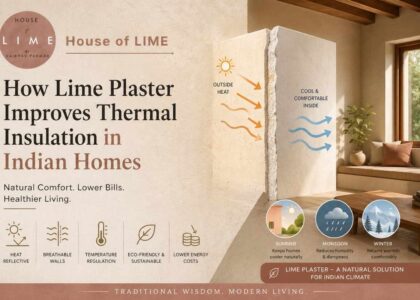
How Lime Plaster Influences Indoor Temperature
Lime plaster also contributes to thermal comfort.
Its porous structure and mineral composition allow it to interact with heat differently than many modern finishes.
Rather than trapping heat near the surface, lime plaster helps moderate temperature fluctuations within the building envelope.
This means:
- Interiors may feel cooler during hot periods
- Heat transfer becomes more gradual
- Surface temperatures remain more balanced
- Thermal comfort improves naturally
While lime plaster is not a replacement for insulation, it can complement passive cooling strategies and support a more stable indoor climate.
Better Air Quality Through Breathability
Indoor air quality has become a major concern in modern homes.
Many buildings suffer from poor air circulation, excessive humidity, and trapped pollutants. Synthetic materials can sometimes contribute to these issues by creating sealed environments.
Lime plaster supports healthier air quality because it encourages moisture movement and reduces conditions that promote mold growth.
Its naturally alkaline properties can also make surfaces less hospitable to certain microorganisms.
As a result, homeowners often experience:
- Fresher indoor environments
- Reduced musty odors
- Lower moisture-related issues
- Healthier wall systems
- Improved overall comfort
This is one reason why lime-based materials have been used for centuries in homes, churches, palaces, and heritage buildings.
Why Lime Plaster Works Well in Sustainable Architecture
Sustainable architecture focuses on reducing energy consumption while improving occupant comfort.
Lime plaster aligns perfectly with these goals because it supports passive environmental control.
Rather than relying solely on mechanical systems, lime helps buildings naturally manage:
- Moisture levels
- Thermal fluctuations
- Indoor comfort
- Wall durability
- Air quality
This contributes to a building that feels comfortable with less dependence on artificial climate control.
For homeowners seeking eco-friendly construction solutions, working with a professional Lime Plaster Service can help ensure proper material selection and application.
The Aesthetic Benefits of a Healthy Microclimate
A balanced indoor environment not only feels better but also helps preserve interior finishes.
Walls exposed to excessive moisture often suffer from:
- Peeling paint
- Damp stains
- Surface blistering
- Mold patches
- Premature deterioration
Because lime plaster regulates moisture naturally, it can help maintain wall appearance over time.
The result is a finish that not only performs well but also ages beautifully.
Traditional Lime Finishes and Modern Luxury
The growing popularity of lime plaster is not limited to performance.
Architects and interior designers increasingly value decorative lime finishes for their texture, depth, and authenticity.
A premium example is Araish Plaster in India, a traditional handcrafted finish known for its elegant sheen and natural beauty.
Araish demonstrates how lime can simultaneously improve indoor comfort and create visually stunning spaces.
Its timeless appeal makes it popular in luxury residences, boutique hotels, and heritage-inspired interiors.
The Importance of Proper Design and Application
The microclimate benefits of lime plaster depend heavily on proper planning and installation.
Factors such as:
- Building orientation
- Wall composition
- Ventilation design
- Moisture exposure
- Climate conditions
all influence performance.
This is why consulting an experienced Architectural Design Consultant can be valuable when designing breathable and environmentally responsive spaces.
Good design ensures that lime plaster works as part of a complete building strategy rather than as an isolated finish.
Why Homeowners Are Rediscovering Lime Plaster
As awareness of indoor health grows, homeowners are looking beyond aesthetics and considering how materials affect everyday living.
Lime plaster offers benefits that extend far beyond appearance.
It helps create interiors that are:
- More breathable
- More comfortable
- Better balanced
- Less prone to dampness
- Healthier for occupants
- Naturally beautiful
These advantages make lime increasingly relevant in modern homes despite being one of the oldest building materials in history.
Final Thoughts
The hidden microclimate effect of lime plaster is one of its most valuable yet least understood qualities. By regulating moisture, supporting healthier air quality, and helping moderate indoor temperatures, lime plaster contributes to a living environment that feels naturally comfortable.
Unlike many modern wall finishes that simply cover surfaces, lime plaster actively interacts with the building and its surroundings. This creates healthier, more breathable interiors while preserving the timeless beauty that has made lime a trusted material for centuries.
For homeowners seeking sustainable comfort, improved air quality, and naturally balanced living spaces, lime plaster remains one of the most effective and elegant solutions available today.