
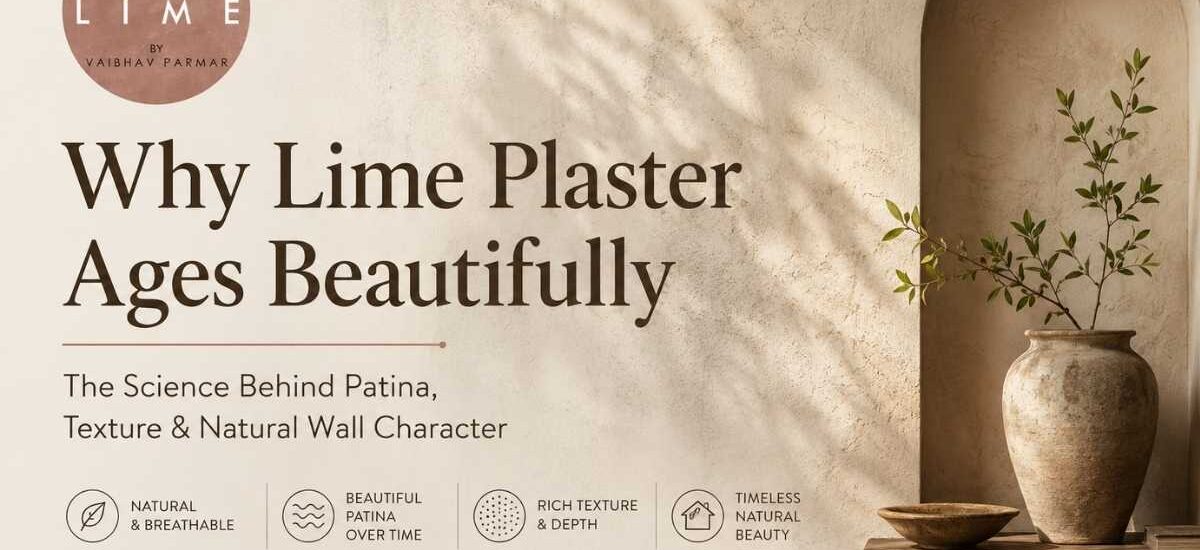
In modern construction, most wall finishes are selected for durability, appearance, and maintenance. But few materials age as gracefully as lime plaster. Unlike synthetic coatings or rigid cement finishes that often lose charm over time, lime plaster develops more depth, softness, and visual richness as the years pass. This natural aging process creates what designers and conservation experts often call patina, a lived-in beauty that reflects time, moisture interaction, texture shifts, and mineral transformation.
Rather than deteriorating unattractively, lime plaster matures. Its changing texture, tonal depth, and organic finish create walls with character that cannot be artificially copied. This is one reason why lime plaster remains valued in heritage architecture, luxury interiors, and sustainable design.
What Makes Lime Plaster Different from Modern Wall Finishes?
Lime plaster behaves very differently from cement plaster, gypsum coatings, or synthetic paints. It is made from natural lime, aggregates, and water, creating a breathable wall finish that allows moisture vapor to pass through surfaces.
Unlike hard industrial finishes, lime plaster remains flexible and slightly porous. This means it reacts naturally to environmental changes such as humidity, temperature variation, and light exposure. Over time, instead of peeling or appearing flat, lime plaster develops a richer and softer appearance.
Its beauty lies in imperfection. Minor tonal changes, subtle movement, and layered mineral effects all contribute to natural wall character.
Understanding Patina: Why Time Improves Lime Plaster
Patina refers to the soft aging effect that forms on natural materials over time. It can be seen in stone, wood, metals, and lime surfaces.
With lime plaster, patina develops through:
- Carbonation over time
- Moisture exchange with the environment
- Light exposure
- Natural mineral settling
- Surface polishing from air and touch
- Gentle texture variation
Instead of looking damaged, lime walls gain warmth and depth. Small tonal differences make the wall feel handcrafted and authentic.
This is especially desirable in interiors where design values texture over artificial perfection.
The Science Behind Carbonation and Aging
One of the key reasons lime plaster ages beautifully is carbonation.
When lime plaster is applied, it contains calcium hydroxide. As it cures, it slowly reacts with carbon dioxide in the air. This converts it into calcium carbonate, a stable mineral very similar to natural limestone.
This slow transformation strengthens the plaster while giving it a naturally matured finish.
Unlike synthetic wall coatings that often degrade with UV exposure or chemical wear, lime becomes visually richer as mineral transformation continues.
This is why lime walls often appear more elegant after years rather than freshly applied.
Why Texture Looks Better Over Time
Texture is one of the most appreciated characteristics of lime plaster.
Machine-finished cement walls usually appear uniform, flat, and lifeless. Lime plaster, however, creates a handcrafted surface where slight irregularities enhance visual depth.
Over time, texture becomes more pronounced because:
- Natural light hits uneven surfaces differently
- Mineral layering adds dimension
- Moisture cycles subtly affect tone
- Hand-applied finishes create unique patterns
- Soft surface polishing increases richness
This creates movement on walls, making interiors feel warmer and more architectural.
Each wall develops its own story.
Natural Wall Character Cannot Be Replicated
One of the biggest reasons architects prefer lime plaster is authenticity.
Painted walls often look identical. Synthetic textures are repeated and predictable. Lime plaster creates individuality.
No two lime walls age exactly the same.
Factors such as:
- Climate
- Humidity
- Hand application style
- Exposure to sunlight
- Interior air quality
- Substrate behavior
all influence the final appearance.
This makes lime plaster especially popular in premium villas, boutique hotels, heritage restoration, and luxury earthy interiors.
Breathability Helps Long-Term Beauty
A major advantage of lime plaster is breathability.
Walls often absorb and release moisture. Cement and synthetic coatings can trap this moisture, causing staining, peeling, or trapped dampness.
Lime plaster allows vapor movement, helping walls stay healthier.
This reduces:
- Blistering
- Surface peeling
- Trapped dampness
- Mold-prone wall stress
- Premature finish failure
Because the wall can breathe, it ages more naturally and beautifully.
If you want a long-lasting breathable finish, choosing a professional Lime Plaster Service ensures correct application and performance.
Why Lime Plaster Feels Warm and Organic
There is a reason lime interiors often feel calmer and more natural.
Its mineral-based surface softly reflects light instead of creating harsh glare like glossy paints or synthetic coatings. This softer reflection gives walls warmth and depth.
Designers often choose lime because it creates:
- Earthy elegance
- Soft matte finishes
- Natural tactile depth
- Minimalist luxury
- Timeless handcrafted appeal
This makes it ideal for homes where emotional warmth matters as much as aesthetics.
Traditional Decorative Lime Finishes and Luxury Texture
Decorative lime finishes have been used for centuries in palaces, heritage homes, and handcrafted architecture.
One of the finest examples is Araish Plaster in India, known for its polished elegance, soft sheen, and artisanal texture.
Araish creates premium wall depth while preserving breathability and natural beauty.
It proves that lime can be both traditional and luxurious.
Why Good Design Matters in Lime Finishes
The beauty of lime plaster depends heavily on craftsmanship.
Poor mixing, rushed curing, or improper substrate preparation can reduce texture quality and aging performance.
That is why expert planning matters.
An experienced Architectural Design Consultant can help determine:
- Suitable finish type
- Surface behavior
- Interior style compatibility
- Moisture considerations
- Texture depth
- Long-term maintenance needs
Good lime design is not only about applying plaster. It is about understanding how the wall will evolve over time.
Lime Plaster and Indoor Comfort
Beautiful walls should also improve living comfort.
Lime plaster contributes to better indoor regulation by balancing moisture and reducing heat stress within breathable wall systems.
This links closely to How Lime Plaster Can Keep your home cool, especially in warmer climates where wall materials strongly influence thermal comfort.
Its breathable nature supports healthier, cooler, and more stable interiors.
Why Designers and Homeowners Still Choose Lime
Lime plaster is timeless because it does not chase perfection. It embraces natural evolution.
As it ages, it becomes:
- More textured
- More authentic
- More breathable
- More visually rich
- More character-driven
- More emotionally warm
That is rare in modern materials.
Instead of hiding age, lime plaster turns age into beauty.
Final Thoughts
Lime plaster ages beautifully because it is alive with natural processes. Carbonation, breathability, mineral transformation, texture evolution, and patina all work together to create walls with depth and individuality.
Where many wall finishes deteriorate over time, lime plaster matures with elegance. Its softness, warmth, and natural wall character make it one of the most visually rewarding materials in architecture.
For homes, heritage structures, and refined interiors, lime plaster remains a timeless finish where aging is not damage, it is design.